MQTT Protocol:1 Accessing the OneNET Cloud Platform
With the development of the mobile internet, MQTT, due to its open source code and low power consumption, will make more contributions in the field of mobile message push. In the Internet of Things field, MQTT can be considered as one of the options for communication between sensors and servers and for information collection. In the future, MQTT will enter all aspects of our lives. This article teaches everyone how to use the mPython Board with the MQTT protocol to access the OneNET platform and remotely control the RGB LED.
What is the MQTT Protocol
As early as 1999, Dr. Andy Stanford-Clark of IBM and Dr. Arlen Nipper of Arcom invented the MQTT (Message Queuing Telemetry Transport) technology. MQTT (Message Queuing Telemetry Transport) is an instant messaging protocol developed by IBM, which may become an important part of the Internet of Things. The protocol supports all platforms and can connect almost all networked objects with the outside world. It is used as a communication protocol for sensors and actuators (such as connecting a house via Twitter).
Preparing the OneNET Platform
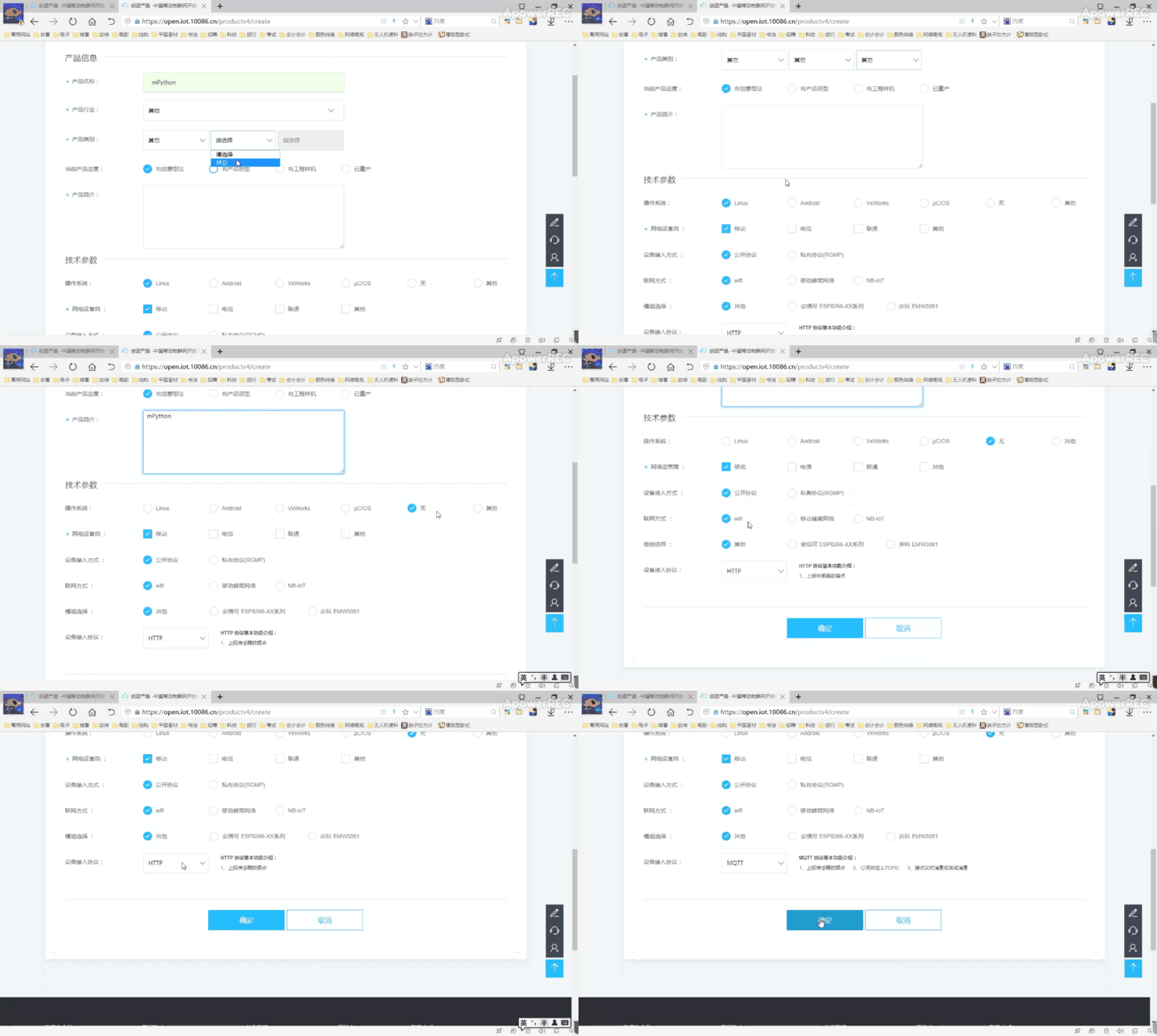
Create a product with the MQTT protocol on the OneNET platform and add a device. OneNET platform official website: https://open.iot.10086.cn/. After logging in successfully, enter the developer center and add a new product.
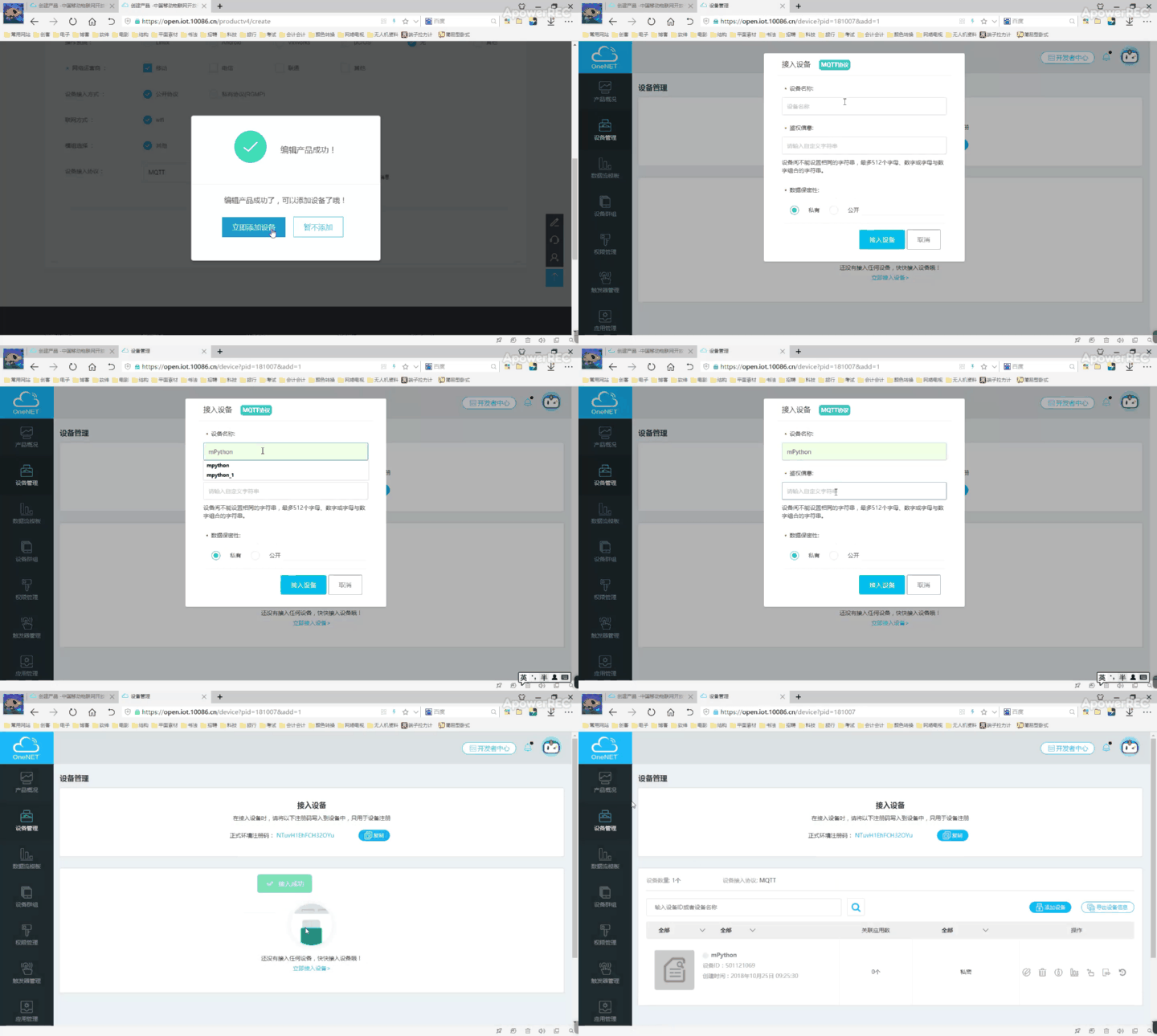
Create a new device mPython under the newly created product.
Writing the Program
Program example:
from umqtt.simple import MQTTClient
from mpython import *
from machine import Timer

# The MQTT server address domain is 183.230.40.39, unchanged
SERVER = "183.230.40.39"
# Device ID
CLIENT_ID = "deviceID"
# Product ID
username='productID'
# Product APIKey:
password='APIKey'

mywifi=wifi()

def sub_cb(topic, msg):

    print((topic, msg))
    if msg == b"on":
        rgb.fill((50,0,0))       # Turn on the red light
        rgb.write()
    elif msg == b"off":        # Turn off the light
        rgb.fill((0,0,0))
        rgb.write()


def main(server=SERVER):
    # The port number is 6002
    c = MQTTClient(CLIENT_ID, server,6002,username,password,keepalive=10)    # Set the keep-alive connection interval to 10 seconds
    c.set_callback(sub_cb)
    c.connect()
    tim1 = Timer(1)           # Create timer 1
    tim1.init(period=2000, mode=Timer.PERIODIC,callback=lambda n:c.ping())   #  Send heartbeat packets to keep the connection
    print("Connected to %s" % server)
    try:
        while 1:
            c.wait_msg()
    finally:
        c.disconnect()

mywifi.connectWiFi("ssid","password")
main()
Hint
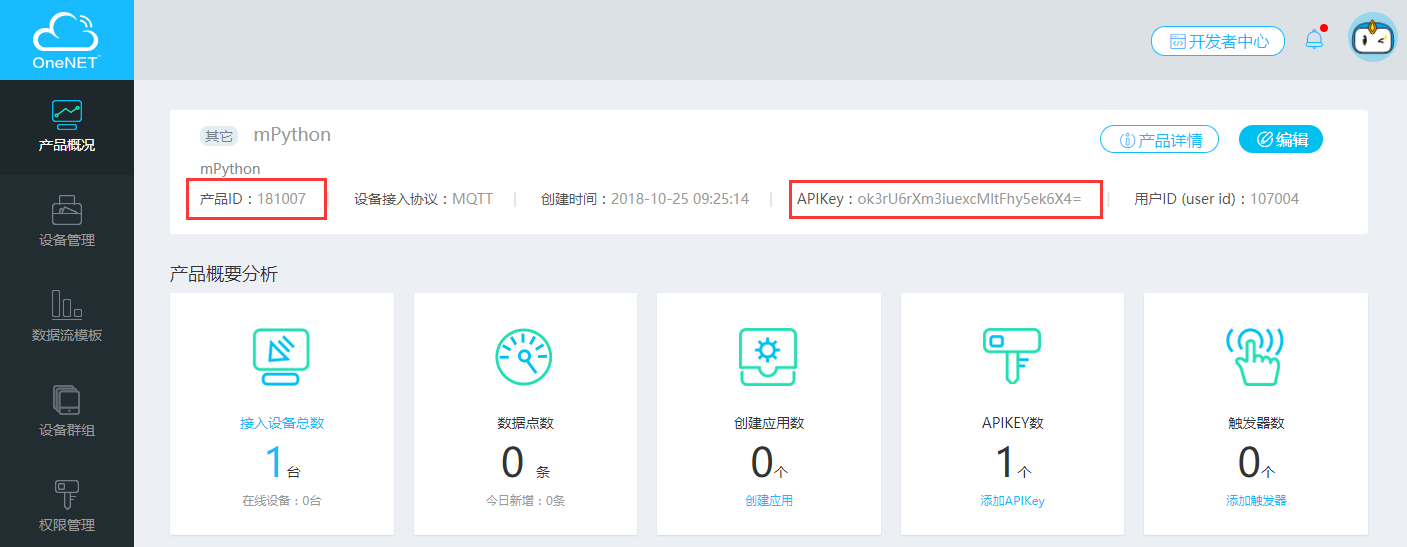
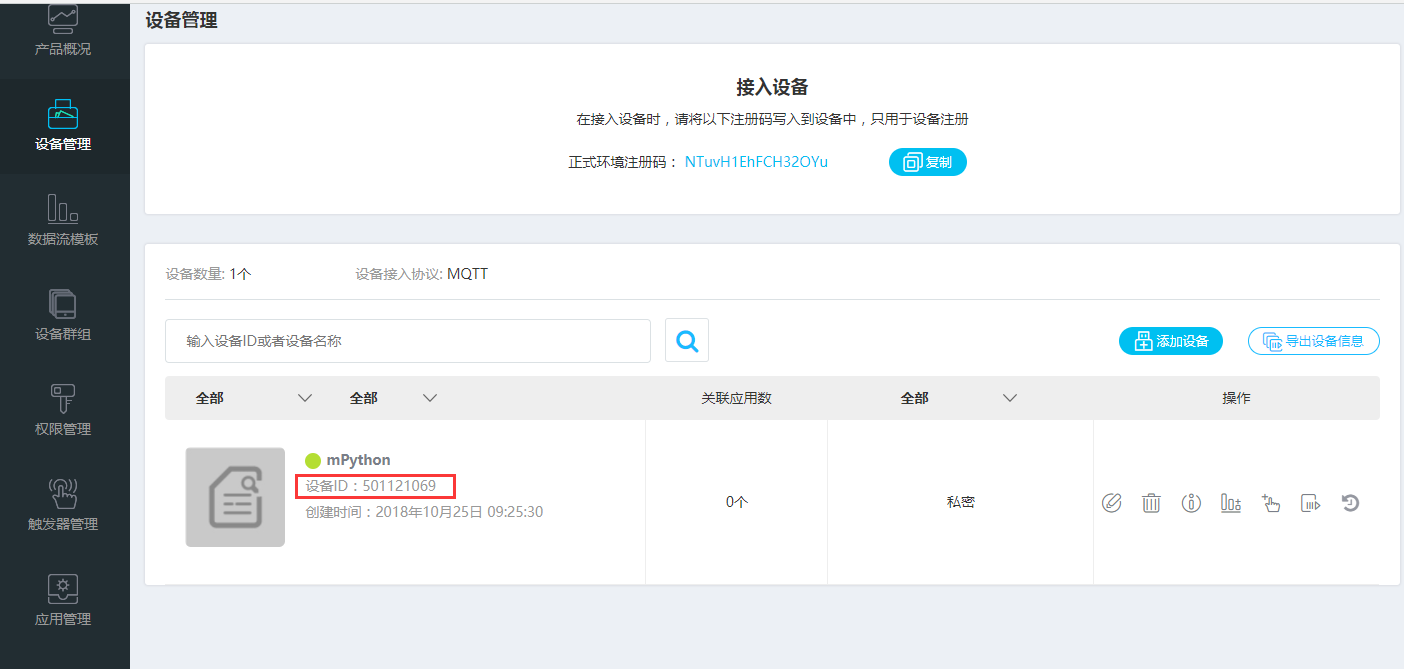
Modify the device ID, product ID and APIKEY parameter information in the program, as shown below.
Effect Demonstration
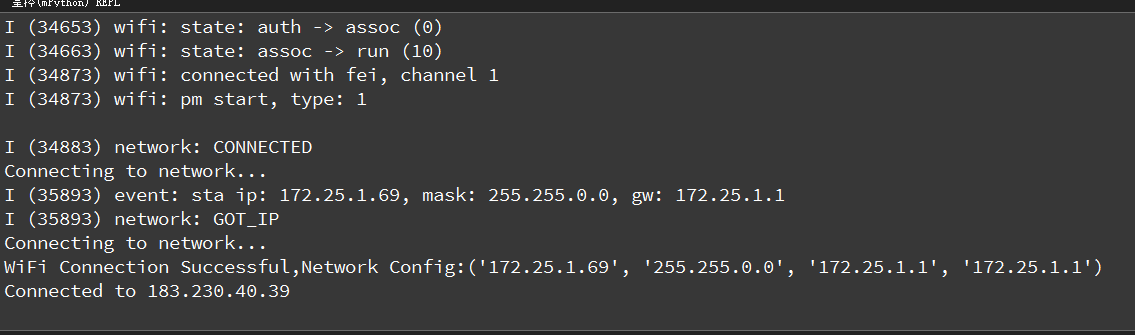
When we reset and restart the mPython Board, the program starts to run.
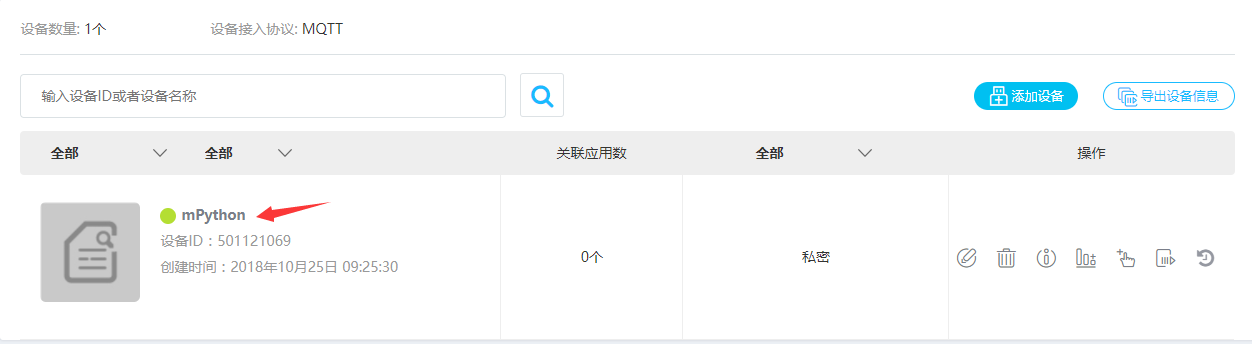
At this time, the device status light on the OneNET cloud platform shows green, indicating that it is online.
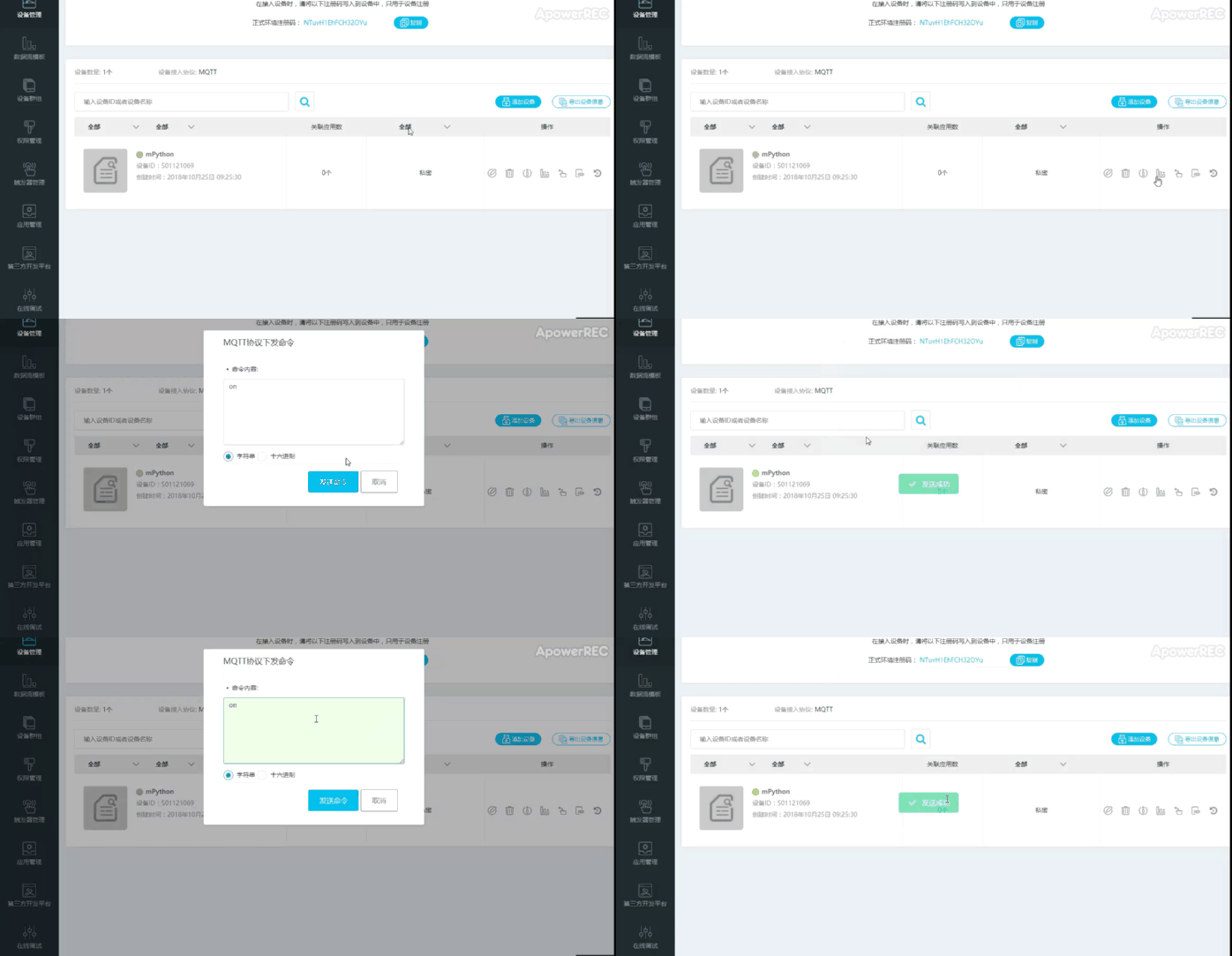
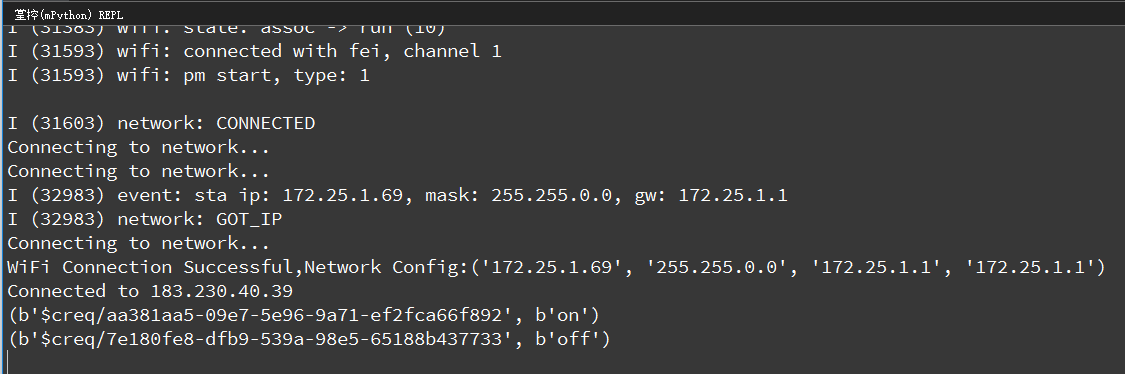
When we send the on and off commands through the page, we will see the message print received at the terminal. The RGB LED on the mPython Board will also change accordingly.