Wireless Broadcast
The mPython Board provides 2.4G wireless RF communication, with a total of 13 channels. It can achieve simple networked communication within a certain area. On the same channel, members can receive broadcast messages. It is similar to a walkie-talkie: on the same channel, communication is achieved.
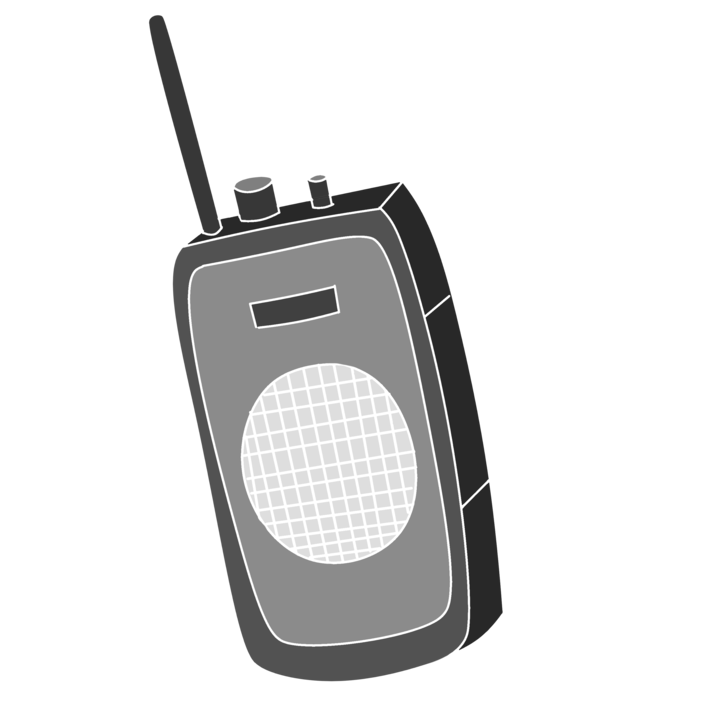
Walkie-talkie
radio
Example of sending a broadcast message
 1'''Broadcast'''
 2'''Broadcast data'''
 3import time
 4import random
 5from mpython import *
 6from radio import *
 7
 8#MPythonESPNow(wifi_ch=0)  wifi_ch: channel 0-14 integer
 9espnow_0 = MPythonESPNow(wifi_ch=0)
10
11#MPythonESPNow.get_mac(mode=0) mode: 0 STA address / 1 AP address, hex string MAC address
12oled.fill(0)
13oled.DispChar(str(espnow_0.get_mac(mode=0)), 0, 0, 1)
14oled.show()
15
16print(espnow_0.get_mac(mode=0)) # sta
17print(espnow_0.get_mac(mode=1)) # ap
18
19while True:
20    msg = random.randint(0, 99999)
21    #MPythonESPNow.broadcast_data(msg='') msg: string data
22    espnow_0.broadcast_data(msg=msg)
23    print(str(msg))
24    time.sleep(0.5)
25
Example of sending data to a device with a specific mac address
 1'''Broadcast'''
 2'''Send data to device with specific MAC address'''
 3import time
 4import random
 5from mpython import *
 6from radio import *
 7
 8espnow_0 = MPythonESPNow(0)
 9
10#MPythonESPNow.set_add_peer(peer_mac='') peer_mac: MAC address hex string, registers the provided MAC address as peer 7CDFA1F20AF4
11espnow_0.set_add_peer(peer_mac='7CDFA1F20ADC')
12
13print(espnow_0.get_mac(0))
14print(espnow_0.get_mac(1))
15
16while True:
17    msg = random.randint(0, 9999999)
18    print(str(msg), 0, 32, 1)
19    #MPythonESPNow.send_msg(peer_mac='',msg='') msg: string data
20    espnow_0.send_msg(peer_mac='7CDFA1F20ADC', msg=msg)
21    time.sleep(0.3)
22
Example of receiving a message
 1'''Receive message'''
 2import time
 3import random
 4from mpython import *
 5from radio import *
 6
 7def espnow_recv_callback(espnow_obj):
 8    espnow_mac, espnow_data, espnow_rssi = espnow_obj.recv_msg() # Receive message
 9    print(espnow_data)
10    print(f"MAC: {espnow_mac}, RSSI: {espnow_rssi} dBm, Data: {espnow_data}")
11
12espnow_1 = MPythonESPNow(0)
13# MPythonESPNow.set_irq_callback(callback) callback Receive messageCallback function
14espnow_1.set_irq_callback(espnow_recv_callback)
15
16print(espnow_1.get_mac(0))
17print(espnow_1.get_mac(1))
- class MPythonESPNow(wifi_ch=0)
Instantiate Radio
- Parameters:
wifi_ch (int) – Set the channel 0-14
- class MPythonESPNow
- class MPythonESPNow
- broadcast_data(msg)
Send wireless broadcast data, group send
- Parameters:
msg (str) – wireless broadcast data
- class MPythonESPNow
- set_add_peer(peer_mac)
Register the provided mac address as a peer address. Registration is required for private sending, not for group sending
- Parameters:
peer_mac (str) – mac address, hexadecimal string
- class MPythonESPNow
- class MPythonESPNow
- set_irq_callback(espnow_recv_callback)
Set the callback handler function for receiving messages
- Parameters:
espnow_recv_callback (function) – callback function